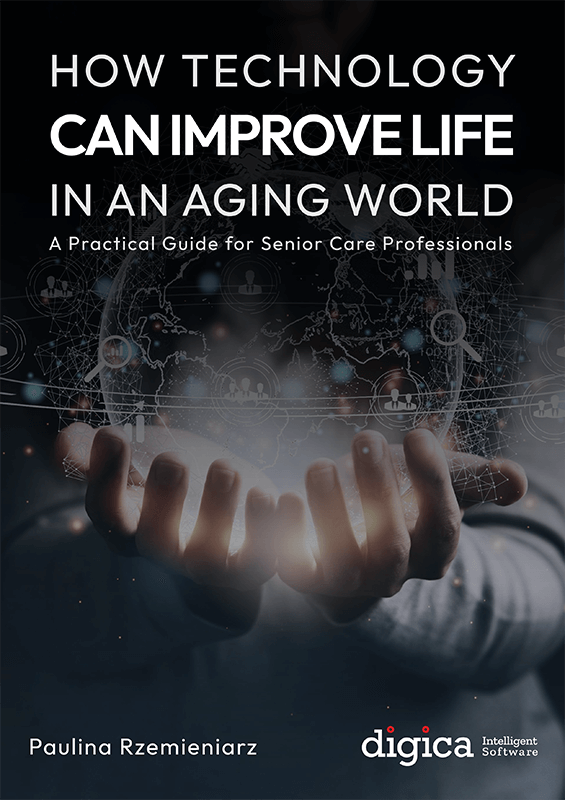
## How Technology Can Improve Life in an Aging World
With a rapidly aging population, AI and digital health solutions are transforming senior care. This ebook highlights **how robotics, AI-driven diagnostics, telemedicine, and universal design** are reshaping the way care is delivered- helping professionals provide more effective, personalized support.
**Get your copy now** and discover how technology is driving better outcomes in senior care.
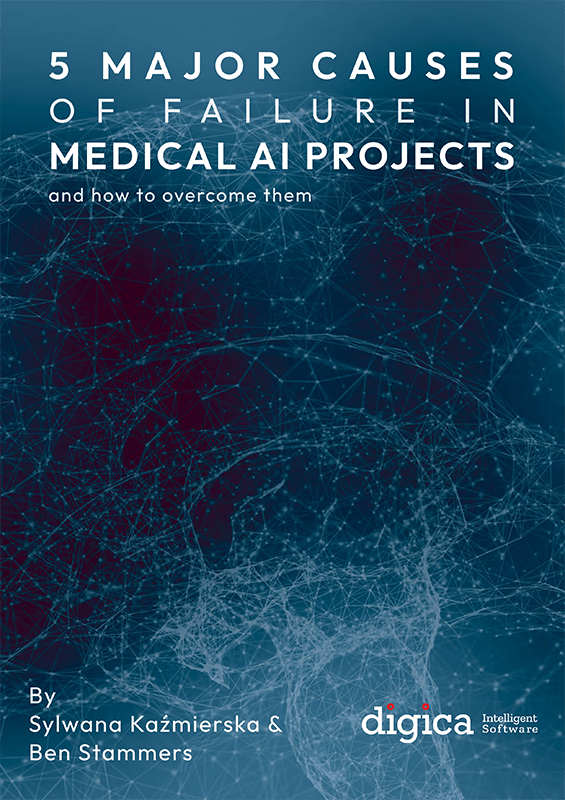
## 5 Major Causes of Failure in Medical AI Projects and How to Overcome Them
Medical AI offers groundbreaking opportunities, but why do so many projects struggle to deliver results? This ebook explores **five key challenges in medical AI development**- from data limitations to model transparency- and provides **clear, actionable solutions** to help organizations navigate these obstacles.
**Download the guide today** to ensure your AI-driven healthcare solutions are built for success.
# Advancing Healthcare with AI-Driven Innovation
**Enhancing Efficiency, Accuracy, and Patient Outcomes**
- **Optimized Medical Imaging** - AI-powered analysis for faster and more precise diagnostics.
- **Automated Data Processing** - Improving efficiency in patient records, diagnostics, and workflows.
- **Remote Monitoring & Predictive Analytics** - Enabling proactive care and early disease detection.
- **AI-Assisted Diagnostics** - Enhancing decision support for medical professionals.
## Download for free
If you want to receive access to our newest white paper please provide your email address.
Please complete all required fields!
Please enter a valid e-mail address
I agree to terms and conditions Agree to terms and conditions
Digica Solutions would like to keep you up-to-date with information on Digica services. For information on how we will use your data, international transfers of data and your rights, please see Full [Privacy Policy](https://www.digica.com/privacy-and-cookie-policy.html) details.
## Here are some examples of our recent work
### Deep Learning in detection of microscopic tissue features
Digica was tasked with detecting features in digitised microscopic tissue images. The project was unorthodox due to the scarcity of labelled examples and the target images having resolution in the order of thousands of megapixels.
The project demanded segmentation or detection of features such as cell nuclei, artefacts and microvessels.
### Preventing cot deaths using radar
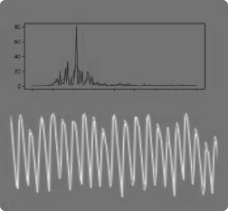
We used a small radar system to monitor a baby's breathing pattern.
For every 2000 babies born, one of them will stop breathing in the middle of the night and die. We want to prevent this by creating an automatic, remote breath control device that triggers an alarm when the baby has difficulty breathing.
### Measuring various life signs using smartphone-derived facial video
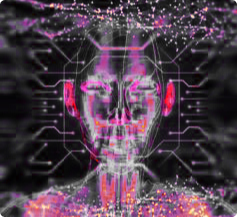
We created a cross platform library for in-vehicle and remote diagnostic human monitoring.
Using photoplethysmography (PPG) and a standard RGB camera, blood volume changes were detected to measure heart rate variability, respiration rate and blood oxygen saturation.
### Optimisation of surgical instrumentation usage
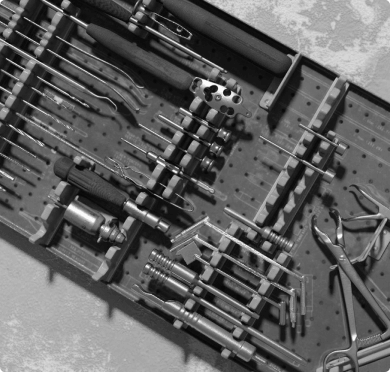
Driven by [computer vision](https://www.digica.com/artificial-intelligence/computer-vision.html) and synthetic data, a deep learning model is incorporated into a mobile application allowing medical personnel to automatically identify medical trays and their contents for use in surgery.
**Before surgery**, staff take a picture of a surgical tool tray using their smartphone and are notified if instruments are missing.
**After surgery**, staff are able to determine which instruments have been used or may be missing.
 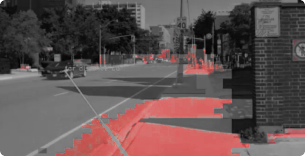 
### [AI Edge](https://www.digica.com/artificial-intelligence/edge-computing.html) supports people with impaired vision
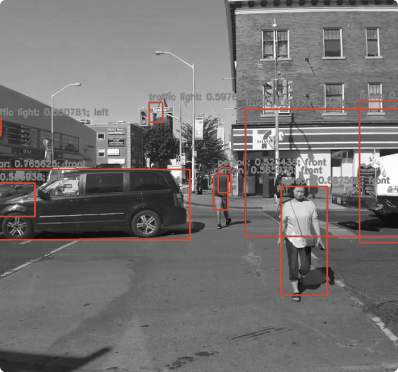
Supporting people with impaired vision by detecting nearby obstructions has been achieved by applying computer vision through a camera integrated into a walking stick.
Our AI-based object detection system recognises surfaces and moving objects based on proximity and potential hazard and communicates this via a haptic controller and Bluetooth earpiece.
The first prototype implementation is being trialled with **[Blackworld](https://blackworld.pl/en/)**, a blind and partially sighted organisation in Poland
## FAQ
### Frequently Asked Questions
[ Show all FAQs ](https://www.digica.com/index.php?Itemid=997)
What are the key benefits of using AI for clinical documentation in healthcare?- **Improved Accuracy:** AI reduces human errors in medical documentation, ensuring precise and standardized records.
- **Time Efficiency:** Automating documentation tasks allows healthcare professionals to focus more on patient care.
- **Better Compliance:** AI ensures adherence to medical coding standards and regulatory requirements.
- **Enhanced Data Insights:** AI extracts valuable insights from clinical notes, helping with better decision-making.
- **Cost Reduction:** By optimizing workflows and reducing administrative overhead, AI lowers operational costs.
How does AI assist in predictive health analytics?Predictive health analytics powered by AI can identify patients at risk of developing certain conditions before symptoms appear. AI models analyze historical health data, lifestyle patterns, and genetic factors to forecast potential health risks. This allows doctors to intervene early, personalize treatments, and improve preventive care strategies. AI has been applied to areas like heart rate variability analysis, respiratory rate monitoring, and early detection of diseases through medical imaging.
What AI tools are available for healthcare billing and payment systems?AI-powered solutions in billing and payment systems enhance accuracy, detect fraud, and optimize revenue cycle management. AI-driven automation helps process claims efficiently, reducing human errors and ensuring timely reimbursements. Machine learning models can analyze billing patterns, detect anomalies that indicate fraudulent activities, and streamline payment workflows, improving financial management for healthcare providers.
What AI solutions are used in clinical documentation?AI in clinical documentation helps automate and streamline medical record-keeping, reducing the administrative burden on healthcare professionals. Technologies like Natural Language Processing (NLP) extract key insights from medical notes, improve documentation accuracy, and ensure compliance with medical standards. AI can also assist in summarizing patient histories, identifying missing information, and improving coding for billing and compliance purposes.
How does AI improve healthcare outcomes?AI enhances healthcare outcomes by enabling faster, more accurate diagnoses, improving treatment planning, and assisting in patient monitoring. Machine learning models can detect diseases earlier, such as lung conditions in X-rays, classify body parts in medical imaging, and even analyze tissue samples to identify anomalies. AI-driven solutions also support predictive health analytics, allowing healthcare providers to anticipate and prevent potential complications, ultimately leading to better patient care and reduced hospitalizations.
How can I collaborate with Digica on AI healthcare projects?We offer a **free consultation** to discuss your AI needs. Get started in 3 steps:
1. **Schedule a Consultation** – Talk with our AI experts about your healthcare challenges
2. **Receive a Custom AI Strategy** – Get a tailored AI roadmap for measurable results
3. **Implement & Scale** – Integrate the AI solution and track its impact on performance
**Contact us today** to explore AI-powered healthcare innovations with Digica!
Can Digica customize AI solutions for my healthcare organization?Yes! We develop **custom AI solutions** tailored to your hospital, clinic, or healthcare system. Whether you need:
- **AI-powered diagnostics**
- **Predictive analytics**
- **Medical imaging automation**
- **Hospital workflow optimization**
- **Information extraction from medical reports (radiology and pathology)**
Digica’s AI team can design, train, and deploy a solution **that meets your specific needs**.
How does Digica ensure data security in AI-powered healthcare solutions?We follow **strict data security and compliance protocols**, including:
- **GDPR & HIPAA compliance**
- **Federated Learning** (privacy-preserving AI)
- **Data encryption & secure model training**
- **Ethical AI frameworks to protect patient confidentiality**
How does Digica’s AI track human features for remote medical diagnosis?Digica has developed an **AI-powered human feature tracking platform** that monitors physical and mental health indicators using a standard RGB camera. This system can:
- **Measure heart rate** through facial analysis
- **Track head and hand movements** for early signs of cognitive or physical decline
- **Analyze gaze direction and micro-expressions** to assess emotional state
- **Monitor seniors at home remotely**, supporting early intervention and diagnosis
**Results:** ✔ Tracks **six different human health indicators** ✔ Designed for **future expansion** (e.g., blink detection, audio transcription, speech analysis)
✔ Enables **remote patient monitoring**, enhancing healthcare accessibility
How does AI help hospitals with inventory and surgical tool management?Digica’s AI-powered **computer vision technology** automatically tracks and recognizes hospital surgical tools. This helps:
- **Reduce errors in surgical procedures**
- **Prevent the loss of expensive medical instruments**
- **Streamline hospital inventory management**
### "There aren’t that many people who have as good a knowledge base as the Digica team."
### Leading global imaging technology company